E-Invoicing for a New German Company: Receive Now, Issue From 2028
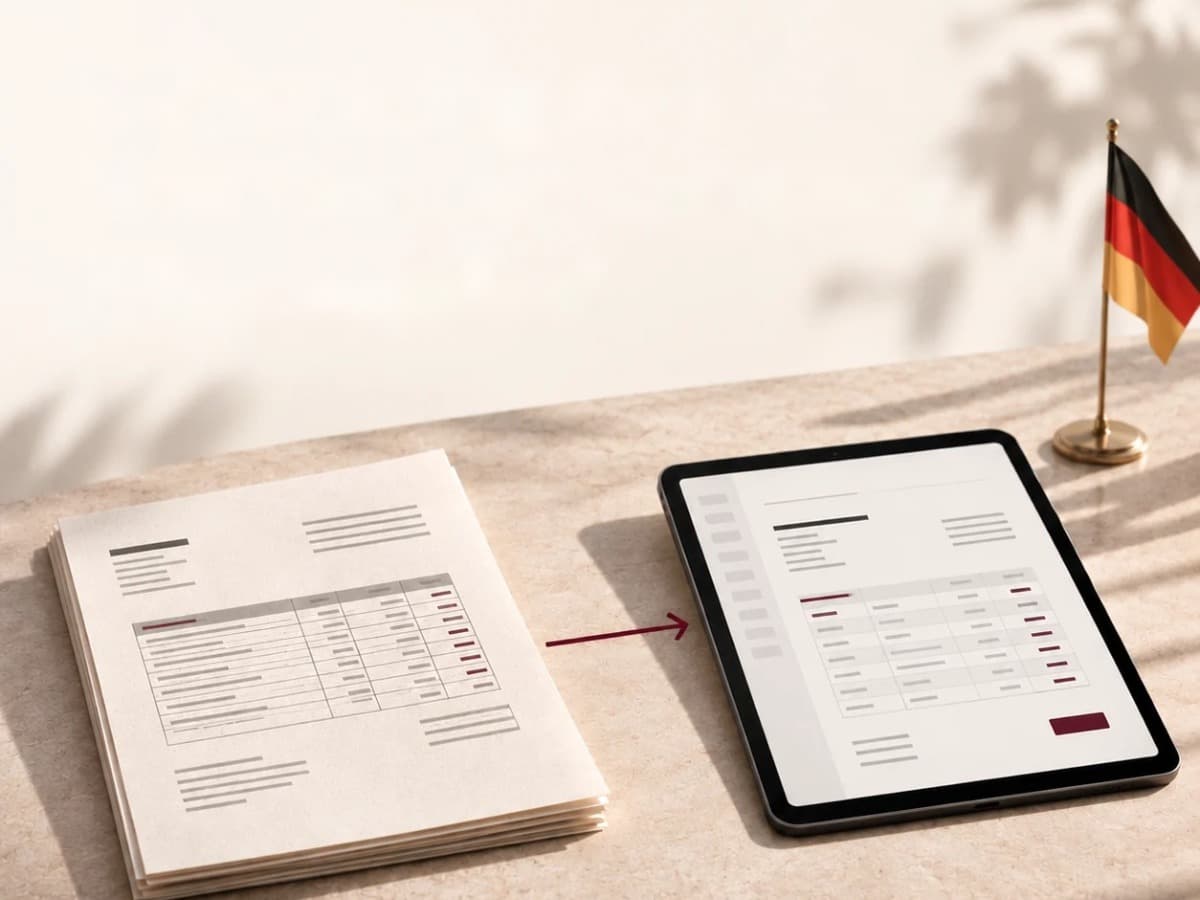
Heard that e-invoices become mandatory in Germany in January 2027? For a company opened now, not yet.
An e-invoice is a structured data file in the XRechnung or ZUGFeRD format. A PDF is not one. Issuing becomes mandatory in stages: from 1 January 2027 for companies with more than €800,000 turnover in 2026, and from 1 January 2028 for everyone else. Receiving is different. Every German business has had to be able to receive e-invoices since 1 January 2025, and a new company starts with that duty.
In practice that means an email address that can receive structured invoice files and a way to store them unchanged, usually through your accounting software or your accountant.
If you plan to enter Germany, this matters for one reason: the rule follows the legal route you choose.
A German GmbH or UG with its business or management in Germany is a German business, so its invoices to German business customers fall under the rule. A company opened now has no turnover near €800,000 in 2026, so in 2027 it can still send paper invoices, or a PDF if the customer agrees. From 2028 the e-invoice is the rule.
A foreign company that registers only for German VAT, with no establishment here, is not covered. Consumer sales are outside the rule too, which is typical for a marketplace account.
So who should look at this early? Mainly founders who want to sell to German retailers, wholesalers or other companies through a German entity. A seller who serves consumers will see little change.
This is not a reason to pick one route over the other. Customers, bank and structure decide that. But it belongs in the plan: large customers may ask for e-invoices before the law requires them, and it is easier to settle who receives and stores the files before the first invoice than after it.
A German company managed from abroad, a German warehouse of a foreign company and similar edge cases are a question for a tax advisor.